Ragdoll Hit
- 4.6
- Rating
- 1.00M
- Installs
- Free
- Price
 Analysis by App-foxy
I picked up Ragdoll Hit expecting a quick action game, and that is exactly where it makes the most sense. It is built around short, physical stickman fights in which movement, impact, and timing matter more than a complicated story or a large set of rules. After spending time with it, I see it as a casual action game for people who enjoy experimenting with momentum and watching attacks produce exaggerated, often funny results.
The important decision is not whether it looks entertaining. It does. The better question is whether you want a simple physics-based brawler or a deeper action game with long-term mastery, detailed controls, and a more serious competitive structure. Ragdoll Hit sits firmly on the accessible side. It is free to start, rated Teen, and developed by Kids Games LLC. Its average rating is 4.6 from around 30 thousand ratings, which matches my impression that the central idea is easy for many players to understand quickly.
I would recommend trying it if you want something you can open for a few minutes without learning a large system first. I would be more cautious if you usually play action games for carefully balanced combat, elaborate progression, or a strong narrative. The physics are the attraction, but they can also be the reason a player eventually moves on.
You May Also Like

 Blood Strike: 2.5 Anniversary
Blood Strike’s Loadouts Turn Every Drop Into a Tactical Gamble
A close look at Blood Strike’s custom loadouts: how fast access to signature weapons reshapes its battle royale rhythm, rewards preparation, and narrows the gap between fights.

 Pandora - Music & Podcasts
Pandora’s Music Is Easy to Start, but Harder to Recover
Pandora’s strength is its low-effort path from a seed to a station. Its weak spot is how much confidence it asks you to place in connection, setup, and quiet recovery.

 8 Ball Pool
 Is Built on Rivalries, Rematches, and Routine
A close look at the rivalries, rematches, shared routines, and unanswered safety questions that turn a quick pool match into a persistent mobile community.

 Samsung Music
’s Quiet Strength Is Playing What You Already Own
Its reach comes less from spectacle than from dependable access to a personal library. That simplicity is both the app’s strongest retention engine and its ceiling.

 AccuWeather: Weather Radar
AccuWeather Review: A Quick, Clear Forecast for Everyday Decisions
For everyday plans, the best forecast is the one you can understand quickly. AccuWeather makes rain timing, radar, and local conditions easy to act on, with a few trade-offs.

 Hill Climb Racing
Why Hill Climb Racing Still Turns Crashes Into One More Run
A tiny car, a bumpy hill and one more upgrade: Hill Climb Racing keeps resurfacing because its simple chaos makes every near-miss feel personal.
More From Our News Desk



What makes the combat worth trying
I find the combat most rewarding when I treat each encounter as a small test of timing and spacing, rather than trying to force the same attack every time. This section looks at why the loose physics can make even a brief fight feel surprising, and where that unpredictability asks for patience. From there, it’s easier to judge which kind of action game suits your habits.
The appeal is in the movement, not the story
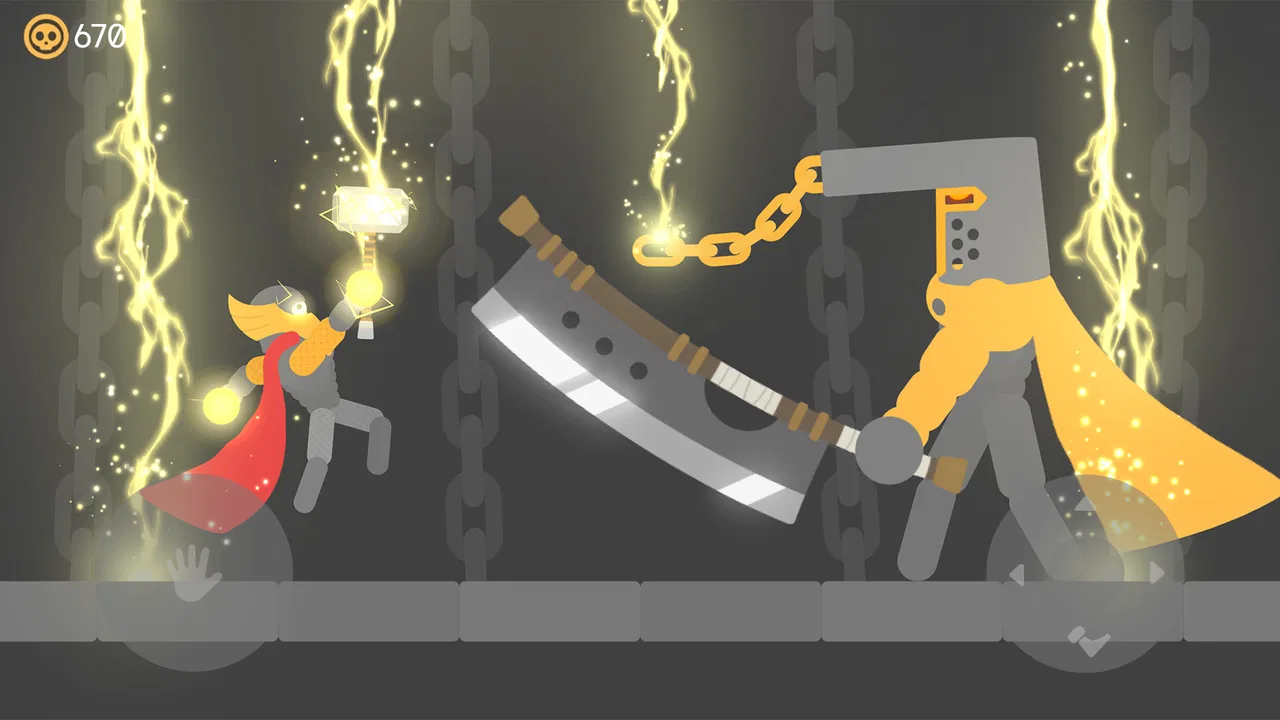
The fighting is based on ragdoll-style motion, so every hit has a physical quality rather than feeling like a simple health bar exchange. Characters react to force, weapons create visual impact, and the action has a loose, unpredictable rhythm. I found that this gives ordinary encounters a playful edge: even when I knew what I wanted to do, the result could look slightly different because bodies and attacks do not behave like perfectly rigid animations.
That unpredictability is useful when you treat each fight as a small experiment. Instead of tapping as quickly as possible, I had better results when I watched spacing, waited for an opening, and considered how an attack would move the opponent. This is one of the less obvious strengths of the game. Its controls may appear simple, but the physics reward patience more than frantic input.
It also makes the game suitable for short breaks. I can imagine playing it while waiting for an appointment or taking a brief pause between tasks. There is no need to reserve a long evening for it. A few encounters can provide the entertainment, and the exaggerated combat makes failure less frustrating than it would be in a highly competitive fighting game.
How I judge whether the controls fit
My first test with a game like this is whether I can understand the relationship between an input and the character’s movement. Ragdoll Hit passes that test at a basic level, but it is not the same as a traditional fighting game with precise combos and strict defensive timing. The loose motion is part of the identity. If you want every action to land exactly where intended, you may find the physical behavior less satisfying.
For new players, I suggest resisting the urge to repeat the strongest-looking attack immediately. Spend the opening moments observing how far the character moves, how much room an attack needs, and how the opponent reacts after contact. This approach turns the early play into a practical tutorial, even when you are not consciously studying the mechanics.
A second useful habit is to think in terms of position rather than button sequences. Keeping enough space to see an incoming threat can be more valuable than trying to chain actions rapidly. When the fight becomes crowded, the screen can feel visually busy, and a rushed input may create an awkward movement instead of the result you wanted. I enjoyed the game more when I accepted that a little disorder is expected.
Why the physics can be both funny and frustrating
Physics-based combat creates memorable moments because it does not always look perfectly rehearsed. An opponent can be sent tumbling in a way that feels more entertaining than a standard animation. That is the part I would show to a friend who wants a light game with immediate visual feedback.
The trade-off is consistency. A game built around loose bodies and force can feel less exact than an arcade fighter. If you lose because an interaction unfolded differently from what you expected, the result may feel amusing once and annoying the next time. Ragdoll Hit works best when you see the physics as the main toy, not as a minor effect attached to a precision combat system.
Who will get the most from it
This is a strong fit for players who like action that starts quickly, visual slapstick, and uncomplicated goals. It can also suit someone who has limited time and wants a game that does not demand a long setup before becoming enjoyable. Fans of stickman-style action may appreciate the clear visual language, while players who enjoy testing how objects and characters react may stay longer than those who only want to win.
I would not make it my first recommendation for someone looking for a story-driven adventure, a serious martial-arts simulator, or a deep multiplayer competition. The Teen content rating is worth considering for families as well. A parent should decide whether cartoon violence and the game’s action style are suitable for the particular player rather than assuming that a simple visual design automatically makes it a children’s game.
How it compares with other action choices
To decide whether this is the right kind of quick action for you, I compare its physics-led fights with the precision of traditional fighters and the broader goals of arena games or action adventures. The useful distinction is not simply which style is better, but what you want a short session to deliver. That comparison also helps clarify when another action choice may offer more lasting value.
When this game is a better choice than a traditional fighter
Compared with a conventional fighting game, Ragdoll Hit is easier to approach because the pleasure comes from physical reactions as much as from technical execution. A traditional fighter usually asks you to memorize combinations, understand character matchups, and improve through repeated precision. Here, I can enjoy a session without committing to that level of study.
That difference matters in everyday use. If I have only a few minutes and want something immediately active, a physics brawler is less demanding than a competitive fighter. I do not need to remember a large move list before I can have fun. The game’s simple premise also makes it easy to hand to a friend and explain: move, attack, and see how the collision plays out.
There is another advantage in the way it handles failure. In a strict fighting game, losing can feel like evidence that I missed a precise timing window. In Ragdoll Hit, a failed attempt can still produce an entertaining tumble. That does not remove frustration completely, but it changes the mood. I am more likely to restart because I want to see whether a different approach creates a better result.
When an arena or action adventure may be better
Players who want a larger sense of progression may prefer an arena game with clearly defined builds, a story-focused action adventure, or a fighting title with a substantial roster and competitive depth. Those alternatives are usually better when the long-term goal is to master a character, follow a campaign, or measure improvement against other skilled players.
Ragdoll Hit is not the choice I would make for a planned gaming session where I want layered objectives and a strong feeling of advancement. Its appeal is more immediate and tactile. If the novelty of physics-based impacts is not enough to hold your attention, the game may feel repetitive sooner than a broader action title.
There is also a difference in the kind of skill being tested. In a traditional action game, success often depends on memorizing patterns or executing reliable combinations. Here, observation and adaptation are more important. That can be refreshing, but it may not satisfy players who enjoy polishing the same technique until it becomes exact.
A practical way to decide before committing
Ask yourself what you want from your next mobile game. If the answer is “a quick burst of silly action,” this one is a sensible candidate. If the answer is “a game I can study for weeks,” you should compare it with deeper alternatives before investing much time. The store’s popularity also suggests that it is easy to discover: it has passed one million installs, so finding other players familiar with the concept should not be difficult.
I would use the free entry point as a test rather than treating it as a promise of unlimited value. Play enough to see whether the physics remain amusing after the first novelty fades. Notice whether you enjoy improving your positioning or whether you are simply repeating attacks. That distinction tells you more about long-term fit than the first exciting encounter.
What to consider about spending
The game is free, but optional purchases range from $2.99 to $69.99 per item. That makes it important to decide your own limit before buying anything. I would first establish whether the core fighting loop is enjoyable without spending, then consider purchases only if they solve a specific problem for me rather than being an impulse triggered by a difficult moment.
This is especially relevant in a short-session game. A purchase has more value when it changes how you play over time, not merely when it provides a brief burst of convenience. I prefer to wait, play several separate sessions, and ask whether I still want the same item after the initial excitement has passed. That simple pause reduces the risk of spending more on a game I only open occasionally.
The cost of switching away is low because the game is free to try. The larger cost is attention: time spent learning its rhythm, deciding whether the physics are enjoyable, and possibly becoming accustomed to a particular way of fighting. If you later move to a more technical action game, the skills will not transfer perfectly, but the habits of watching distance and waiting for openings can still help.
Device and version considerations
The current version is 8.7.10, and the game supports devices running Android 7.0 or later. For someone using an older phone or tablet, that minimum requirement is a practical checkpoint before downloading. I would also keep the operating system updated where possible, since action games that rely on responsive touch input are generally more pleasant when the device itself is running smoothly.
On a smaller screen, the simplicity of the stickman presentation is helpful because the characters remain easy to identify. Still, crowded physical interactions can become harder to read when the display is cramped. If you have both a phone and a tablet available, I would try the device with the more comfortable touch area first, especially if you intend to play for longer than a quick break.
Small habits that improve the experience
My first practical tip is to use the beginning of a fight to learn rather than attack automatically. Watch the opponent’s approach, identify the safest distance, and then choose an action. This usually produces more satisfying results than treating every encounter as a race to tap.
Second, replay a situation with a different rhythm when an attack fails. Try waiting, changing position, or approaching from another angle instead of repeating the same input. Because the game’s physical behavior is central, small changes can make the outcome feel noticeably different. This is a better way to explore the system than assuming the most forceful move is always the best one.
Third, use short sessions deliberately. The game’s strongest moments are often bursts of action, so stopping after a satisfying run can preserve the fun. If you continue while feeling bored, the same physics that were amusing earlier may start to feel repetitive. I consider that a useful boundary rather than a flaw: this is a game I would keep ready for spare moments, not necessarily one I would play continuously for hours.
Finally, separate visual spectacle from actual improvement. A dramatic hit can look impressive without being the safest or most effective choice. I improved more when I paid attention to why an encounter succeeded: better spacing, better timing, or simply a fortunate collision. That mindset gives the game more substance than its short store description suggests.
What the developer’s presentation gets right
Kids Games LLC has centered the experience on a concept that is immediately understandable. The stickman style avoids visual clutter, while the action communicates its purpose quickly. I do not need a long explanation to understand why a hit worked or why a character went flying.
That clarity is valuable for casual players, but it also sets expectations. The game is not trying to disguise its straightforward nature with complicated terminology. If you want a focused physics fight, the presentation is honest about that. If you want a large world, extensive character development, or a cinematic campaign, the same simplicity may feel limiting.
My recommendation for different players
I recommend giving Ragdoll Hit a try if you enjoy free action games that deliver quick feedback, playful collisions, and a low barrier to entry. It is especially suitable for short breaks, casual experimentation, and players who prefer discovering a game through movement rather than reading instructions.
I would skip it, or at least keep expectations modest, if your priority is precise competitive combat, a deep narrative, or a long progression journey. A different action category will serve you better in those cases. The physics can create charm, but they are not a substitute for the detailed systems found in more demanding fighters and adventure games.
For me, the final verdict is positive with a clear qualification: Ragdoll Hit is best enjoyed as a compact physics playground, not as a complete replacement for a deep fighting game. Its free price makes experimenting easy, its Teen rating calls for sensible audience judgment, and its strong reception shows that the basic idea connects with many players. I would install it for quick action, test the combat without spending first, and keep it as a pick-up-and-play option rather than expecting an endless competitive commitment.
FAQs for Ragdoll Hit
01What is Ragdoll Hit and how is the gameplay?
Ragdoll Hit is a physics-based action game focused on short, chaotic battles between floppy ragdoll characters. You control your fighter by moving, aiming, and striking opponents while taking advantage of momentum and the environment. The intentionally loose physics make every hit look unpredictable, so matches feel more like entertaining experiments than precise competitive combat. It is easy to start, but timing and positioning still matter.
02Is Ragdoll Hit free to download and play?
Ragdoll Hit can generally be downloaded for free on supported mobile devices, allowing you to try the core gameplay without paying upfront. However, the experience may include advertisements, optional purchases, or other monetized elements depending on the version and platform. Before downloading, it is worth checking the current store listing for in-app purchase details, age guidance, and any regional differences in availability.
03Does Ragdoll Hit require an internet connection?
The main gameplay in Ragdoll Hit is designed around quick individual battles and may be playable without a constant internet connection, which makes it convenient for short sessions while traveling or when mobile data is unavailable. Nevertheless, advertisements, updates, analytics, cloud features, or certain modes may require connectivity. Availability of offline play can change after updates, so verify the latest store description.
04Is Ragdoll Hit suitable for children?
Ragdoll Hit uses cartoon-style characters and exaggerated physics rather than realistic violence, but the central objective is still hitting and defeating opponents. Parents should review the age rating, advertising policy, and in-app purchase settings before allowing younger children to play. The simple controls are accessible, although frequent ads or optional purchases may affect the experience for children using an unsupervised device.
05What devices are compatible with Ragdoll Hit?
Ragdoll Hit is released for mobile platforms such as Android and iOS, but exact compatibility depends on the version, operating-system requirements, and the developer’s latest updates. Older phones may install the game yet experience slower performance, longer loading times, or occasional stuttering during physics-heavy scenes. Check the official Google Play or App Store page on your device for current requirements before downloading.
Pros
- Simple controls make it easy to start playing immediately.
- Physics-based combat creates unpredictable and entertaining moments.
- Short levels are convenient for quick gaming sessions.
- Many character skins and weapons add visual variety.
- Works well as a casual game for stress relief.
Cons
- Gameplay can become repetitive after extended sessions.
- Some levels rely heavily on luck rather than strategy.
- Ads may interrupt the experience between levels.
- Certain upgrades or items may require in-app purchases.
- The ragdoll physics occasionally behave inconsistently.

Ragdoll Hit
Gallery